The material selection in construction engineering has never been about pursuing the highest alloy performance, but rather about finding the optimal solution for both working conditions and total life-cycle cost. In building envelopes, insulation, and decorative applications, 1060 pure aluminum coils are a seemingly basic yet widely used general-purpose material. Compared to alloy-strengthened 3000 series and 5000 series aluminum materials, 1060 aluminum coil, with its inherent high-purity aluminum matrix, achieves a precise balance between plasticity, heat reflection efficiency, atmospheric corrosion resistance, and procurement cost, making it the most widely used pure aluminum category in conventional construction projects worldwide. BCM Aluminum's standardized mass-produced 1060 aluminum coils for architectural use offer stable base material quality and precise dimensional control, making them suitable for various on-site construction and factory prefabrication scenarios.
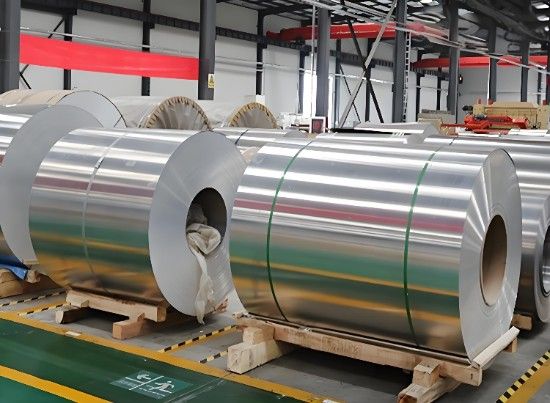
From a material perspective, 1060 aluminum coil belongs to the 1000 series industrial pure aluminum, with an aluminum content ≥99.60%. Impurities such as iron and silicon are strictly controlled, resulting in a uniform metallographic structure free of coarse inclusions. Pure aluminum substrates naturally possess self-passivation capabilities. When exposed to the atmosphere, they quickly form a dense aluminum oxide film, which can self-repair minor scratches and continuously resist rain, ultraviolet radiation, and conventional atmospheric corrosion. In typical inland climates, bare aluminum can meet long-term service requirements without the need for additional coating protection. Meanwhile, 1060 aluminum coil has a thermal conductivity of approximately 234 W/(m·K) and a smooth surface heat reflectivity exceeding 85%. When used for thermal insulation cladding and roof waterproofing layers, it effectively reflects solar radiation, reduces heat conduction, and significantly improves the overall energy efficiency of the insulation system.
The on-site adaptability to building construction is a core advantage of 1060 aluminum coils that cannot be replaced. Construction projects involve numerous on-site bending, seam locking, edge rolling, and irregular cutting processes, requiring extremely high material plasticity and processing tolerance. BCM's 1060 aluminum coils for architectural are available in two main tempers: O (soft) and H14 (semi-rigid), covering various construction needs. The O temper has an elongation of ≥30%, is soft and easily shaped, allowing for manual forming of complex curved surfaces, rounded edges, and variable diameter joints, suitable for irregular architectural decorations and special pipe joints. The H14 temper has a stable tensile strength of 110–145 MPa and a yield strength of ≥90 MPa, balancing structural stiffness and cold bending performance. It exhibits no cracking during 90-degree right-angle bends, and the seams are tight and leak-proof after interlocking, making it a standard choice for thermal insulation cladding, roof flashing, and lightweight gutters. Compared to high-hardness alloy aluminum coils, 1060 aluminum coil can be cut and drilled on-site without heavy tools, making construction easier and more efficient.
In terms of dimensional accuracy and quality control standards, BCM's 1060 aluminum coils for architectural are manufactured strictly in accordance with ASTM B209 standards. Standard thicknesses range from 0.2mm to 1.5mm, with 0.3mm, 0.5mm, and 0.8mm being the mainstream specifications for insulation and roofing projects. Widths can be customized from 100mm to 1500mm, with cutting accuracy controlled within ±0.5mm, allowing direct matching to component dimensions and reducing on-site cutting waste. Thickness tolerance is consistently controlled within ±0.02mm, with a flatness ≤2mm/m, free from defects such as waves, warping, and roller marks. After installation, it is flat and smooth with tight overlaps. Two surface finishes are available: smooth and orange peel embossed. The embossed version forms an air insulation layer between the aluminum coil and the insulation layer, further reducing heat loss while improving the panel's anti-dent and anti-slip properties.
From an engineering economic perspective, for conventional building projects in inland, non-corrosive environments, the corrosion resistance of 1060 pure aluminum fully meets service requirements, and its procurement cost is significantly lower than that of alloy aluminum coils, making it the optimal choice balancing performance and cost. Its applications cover multiple fields, including building pipe and equipment insulation, roof waterproofing lining, exterior wall insulation and decoration lining, interior ceiling base, and ventilation and air conditioning duct wrapping. Furthermore, the aluminum material is 100% recyclable, aligning with the trend of green building materials. Each batch of products comes with complete material certification and performance test reports, conforming to engineering acceptance standards worldwide.
As a fundamental and mainstay in the architectural aluminum system, 1060 pure aluminum coils, with their mature and reliable performance, excellent construction adaptability, and outstanding cost advantages, support the enclosure and insulation needs of the vast majority of conventional building projects. BCM Aluminum will continue to provide global building customers with cost-effective pure aluminum coil solutions through stable quality control and flexible customization capabilities.