
Embossed aluminum coils, with their dual advantages of three-dimensional texture and functional properties, have long transcended the realm of mere decorative materials, becoming a versatile engineering material with both practical and economic value in the industrial and construction sectors. BCM Aluminum has built a comprehensive product system of embossed aluminum coils covering multiple alloys, patterns, and thicknesses. Relying on precise embossing processes and stress control technology, the embossed aluminum coil products offer stable performance and strong adaptability to various scenarios, and are widely used in five core areas: building envelope, industrial insulation, transportation, refrigeration appliances, and light manufacturing, providing functional aluminum solutions for various projects worldwide.
Building envelopes and metal roofing are the largest application scenarios for embossed aluminum coils. BCM offers three architectural-specific patterns: stucco, orange peel, and lentil, matched with two weather-resistant alloy systems: 3003 and 3105. The standard embossing depth is 0.18–0.25 mm, followed by low-temperature stress relief treatment, resulting in a flatness of ≤2 mm/m. The stucco-textured version offers a natural, anti-glare finish and is widely used in public building cladding and old building renovation projects. Its rough substrate significantly improves the adhesion of the fluorocarbon coating, achieving a 2T T-bend performance without paint peeling. The lentil-textured version boasts superior rigidity and, when combined with 3105 alloy, is used for large-span metal roofs. Its wind uplift and snow pressure resistance are more than 20% higher than smooth panels of the same thickness, allowing for reduced purlin density and lower overall project costs.
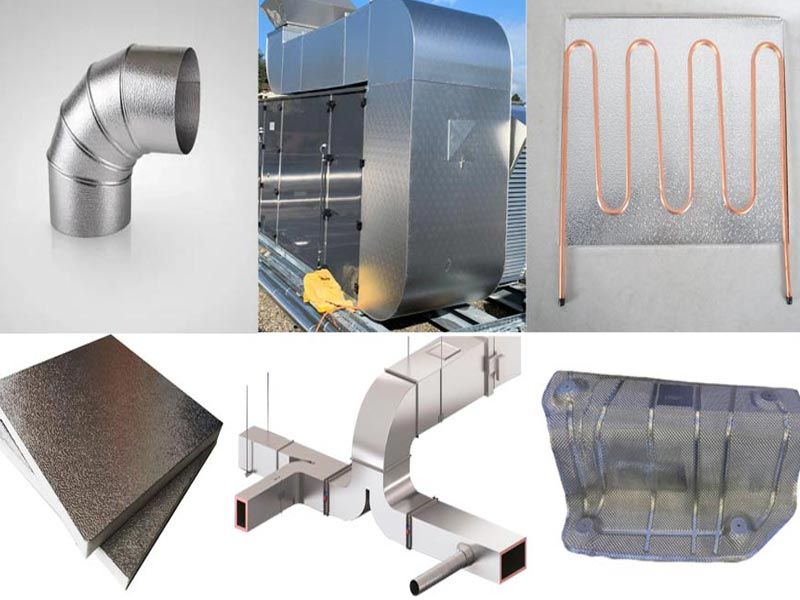
Industrial insulation and piping engineering are essential application areas for embossed aluminum coils. BCM's embossed aluminum jacketing coils feature an orange peel texture as their core pattern, covering two base materials: 1060 pure aluminum and 3003 rust-resistant aluminum, with a standard thickness of 0.2–1.0 mm. The embossed texture creates a uniform, static air layer between the aluminum layer and the insulation cotton, reducing solid-to-solid heat conduction and improving overall insulation performance by 10%–15% compared to smooth aluminum coils. Meanwhile, the textured surface increases internal surface friction, preventing slippage and misalignment when wrapping circular pipes, and providing a better fit for irregularly shaped parts such as elbows and tees. The embossed aluminum cladding coil product can be laminated with multiple layers of vapor barrier, such as kraft paper, polyethylene film, and poly surlyn film, and the integrated structure reduces on-site construction steps by approximately 20%.
In the transportation and equipment manufacturing sectors, embossed aluminum coils balance lightweight design and damage resistance. BCM offers lentil-patterned and diamond-patterned products for trailers, containers, and special-purpose vehicles, compatible with 3003 and 5052 alloy substrates, with H14/H24 temper options available. The embossed texture disperses external impacts, improving dent resistance by over 30% compared to smooth panels, while effectively concealing minor scratches during transportation and use. Compared to traditional steel cladding panels, embossed aluminum sheets of the same specifications can reduce weight by over 60%, effectively reducing vehicle curb weight. The 5052 alloy version can withstand over 1000 hours of neutral salt spray testing, meeting the long-term usage requirements of coastal transportation and outdoor work equipment.
Refrigeration appliances and commercial cold storage are high-precision applications of embossed aluminum coils, primarily covering components such as refrigerator/freezer liners, evaporator heat exchange fins, and the inner walls of commercial refrigerators. BCM Aluminum has customized a fine orange peel embossing process for this application, with an embossing depth controlled between 0.10 and 0.18 mm, resulting in a fine and uniform pattern. The base material is mostly 1060 pure aluminum or 3003 rust-resistant aluminum, matched in O or H14 temper. The textured surface increases the heat exchange area by approximately 15%, enhancing air convection heat transfer and improving cooling efficiency. The base material meets food contact safety standards such as FDA and GB 4806.9, with no heavy metal leaching, and can directly contact refrigerated foods. Based on years of experience, 0.2–0.4 mm thick 1060-O fine orange peel embossed coils are preferred for refrigerator liners, balancing deep-drawing formability and cost; evaporator fins mostly use 0.1–0.2 mm thick 3003-H14 embossed material, which is less prone to deformation under long-term hot and cold cycles.
In the civil, light industrial, and public facilities sectors, embossed aluminum coils combine decorative and practical functions. BCM offers products with delicate textures such as fine orange peel and matte embossing, covering 1060 pure aluminum and pre-coated colored series, widely used in appliance casings, interior ceilings, signage, and other applications. The embossed diffuse reflection effect is soft and non-glaring, and the color difference within the same batch of pre-coated versions is ΔE≤1.0, ensuring visual uniformity when splicing large areas. Products can be precisely cut to custom widths, adapting to various continuous processing production lines.