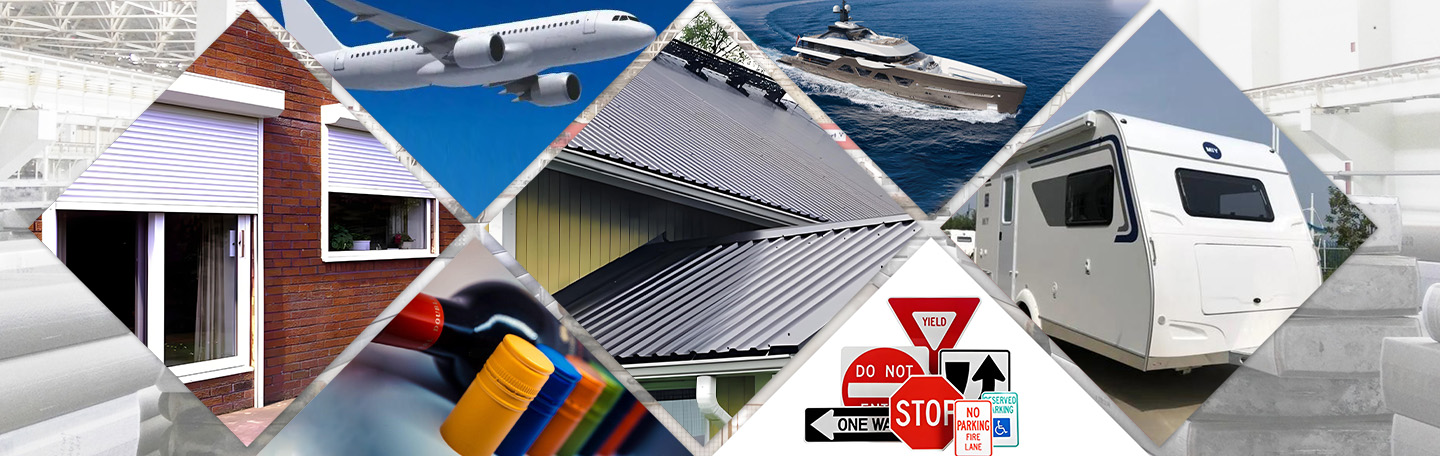
Aluminium sheets are widely used in the manufacture of trailers, truck bodies, enclosed trailers, utility trailers, refrigerated trailers, caravans, horse trailers and transport equipment.
Compared with conventional steel materials, aluminium provides important advantages for trailer construction, including lower weight, excellent corrosion resistance, good formability and a clean, durable appearance. Depending on the trailer component and service environment, different aluminium alloys, tempers, thicknesses and surface finishes can be selected.
Aluminium sheets can be used for trailer side panels, roof skins, doors, interior linings, flooring, ramps, fenders, toolboxes and decorative body panels.
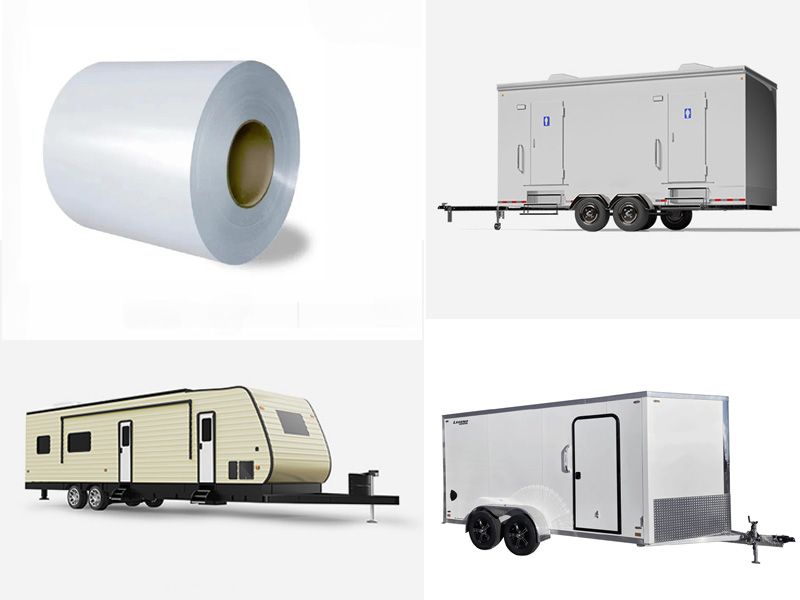
Aluminium is significantly lighter than steel, helping trailer manufacturers reduce overall vehicle weight. A lower trailer weight can improve payload capacity, fuel efficiency and ease of handling.
Trailer bodies are frequently exposed to rain, humidity, mud, road salt, temperature changes and outdoor environments. Aluminium naturally forms a protective oxide layer, making it an excellent material for corrosion-resistant trailer panels.
Aluminium sheets can be cut, bent, punched, drilled, riveted, welded or bonded, depending on the alloy and temper. This makes aluminium suitable for a wide range of trailer body designs and fabrication processes.
Trailer aluminium sheets are available in mill finish, painted, pre-painted, stucco embossed, brushed and checker plate finishes. Protective film can also be applied to help prevent surface scratches during fabrication and transport.
Aluminium trailer panels offer a long service life and require relatively low maintenance, especially in outdoor or high-humidity environments.
Aluminium sheets are commonly used for trailer side panels because they provide a lightweight, corrosion-resistant and visually appealing exterior surface.
For standard enclosed trailers and cargo trailers, 3003 H14, 3003 H24, 3105 H14 and 3105 H24 are commonly selected. These alloys offer good formability and are suitable for smooth, painted or pre-painted trailer siding.
For heavy-duty trailers or applications in humid, coastal or corrosive environments, 5052 H32 and 5754 H32 are recommended.
Typical specifications:
| Item | Recommended Specification |
|---|---|
| Alloy | 3003, 3105, 5052, 5754 |
| Temper | H14, H24, H32 |
| Thickness | 1.0–2.0 mm |
| Common Width | 1,220 mm, 1,250 mm, 1,500 mm |
| Common Length | 2,440 mm, 2,500 mm, 3,000 mm |
| Surface | Mill finish, painted, pre-painted or protective film |
Aluminium sheets are suitable for trailer roof skins due to their low weight and weather resistance. For roofs, the material should have sufficient formability for bending, profiling or installation over the trailer frame.
3003 H14/H24 and 3105 H14/H24 are widely used for general trailer roof applications. For environments with higher moisture exposure or more demanding corrosion-resistance requirements, 5052 H32 or 5754 H32 may be used.
Typical specifications:
| Item | Recommended Specification |
|---|---|
| Alloy | 3003, 3105, 5052, 5754 |
| Temper | H14, H24, H32 |
| Thickness | 0.8–1.5 mm |
| Common Width | 1,220 mm, 1,250 mm, 1,500 mm |
| Common Length | 2,500 mm, 3,000 mm, 4,000 mm |
| Surface | Mill finish, painted or stucco embossed |
Trailer doors and rear body panels require good rigidity, corrosion resistance and an attractive surface. Aluminium sheets can be used for rear doors, side doors, access panels and internal door skins.
For standard doors, 3003 H14/H24 and 3105 H14/H24 are common choices. Where greater strength is required, 5052 H32 or 5754 H32 can be considered.
Typical specifications:
| Item | Recommended Specification |
|---|---|
| Alloy | 3003, 3105, 5052, 5754 |
| Temper | H14, H24, H32 |
| Thickness | 1.0–2.5 mm |
| Common Width | 1,000 mm, 1,220 mm, 1,250 mm, 1,500 mm |
| Common Length | Cut to trailer door size |
| Surface | Mill finish, painted, pre-painted or brushed |
For trailer floors, ramps, steps and anti-slip platforms, aluminium checker plate is a popular solution. Its raised tread pattern improves slip resistance and provides a durable surface for loading and unloading operations.
For this application, 5052 H32, 5754 H32 and 6061 T6 are commonly used. These materials provide higher strength and better resistance to mechanical loading than general-purpose trailer siding alloys.
Typical specifications:
| Item | Recommended Specification |
|---|---|
| Alloy | 5052, 5754, 6061 |
| Temper | H32, H34, T6 |
| Thickness | 2.0–6.0 mm |
| Common Thickness | 2.5 mm, 3.0 mm, 4.0 mm, 5.0 mm |
| Common Width | 1,250 mm, 1,500 mm, 2,000 mm |
| Common Length | 2,500 mm, 3,000 mm, 4,000 mm, 6,000 mm |
| Surface | 5-bar checker plate, diamond plate or anti-slip embossed finish |
Aluminium sheets can also be used for interior trailer linings, wall panels, ceiling panels, partitions and protective covers. These applications usually require a clean surface, easy maintenance and good corrosion resistance.
3003 H14, 3105 H14 and 5052 H32 are commonly used depending on the required strength and environment.
Typical specifications:
| Item | Recommended Specification |
|---|---|
| Alloy | 3003, 3105, 5052 |
| Temper | H14, H24, H32 |
| Thickness | 0.8–1.5 mm |
| Surface | Mill finish, stucco embossed, painted or protective film |
| Application | Interior walls, ceilings, partitions and protective linings |
Mill finish aluminium has a natural metallic appearance and is suitable for fabrication, further painting, lamination or coating.
Pre-painted aluminium sheet is suitable for trailer side walls, roof panels and decorative trailer body surfaces. It can reduce subsequent painting work and provide a consistent exterior colour.
Stucco embossed aluminium offers improved scratch resistance and a decorative texture. It is commonly used for trailer interior linings, roofing, insulation-facing panels and wall applications.
Checker plate, also called tread plate or diamond plate, provides improved slip resistance. It is suitable for trailer floors, ramps, steps, fenders and toolboxes.
When selecting aluminium sheets for trailer manufacturing, the following factors should be considered:
Application location: side panel, roof, floor, ramp, door or interior lining
Required strength: standard body panel or heavy-duty structural component
Corrosion environment: normal outdoor use, high humidity, road salt or coastal region
Fabrication process: bending, roll forming, welding, riveting, punching or bonding
Surface requirement: mill finish, painted, embossed or anti-slip pattern
Sheet dimensions: required thickness, width, length and cut-to-size format
Weight target: balancing material thickness, strength and trailer payload requirements
For standard trailer exterior panels, 3003 and 3105 are practical choices. For applications requiring stronger corrosion resistance or higher strength, 5052 and 5754 are preferred. For structural parts and loading ramps, 6061 T6 is often the suitable option.
Whether you need aluminium sheets for trailer side panels, roofs, doors, floors, ramps or interior linings, we can recommend suitable alloys, tempers, dimensions and surface finishes according to your application.
Please send us your required:
Alloy and temper
Thickness
Width and length
Surface finish
Quantity
Application
Destination port or delivery address
Contact us today for technical support and a quotation for aluminium sheets for trailers.