
When selecting stucco embossed aluminum sheet coils, 1060 pure aluminum is often considered an "entry-level basic model," easily overlooking the differences in performance resulting from variations in processing techniques. Many projects opt for cheaper, ordinary materials, only to encounter problems like uneven surface texture, inconsistent pattern depth, and misaligned joints after construction, with rework costs far exceeding the material price difference. Based on years of experience in aluminum materials, while 1060 pure aluminum's low hardness and good plasticity seem to have a low barrier to entry for embossing, achieving dimensional stability and pattern uniformity actually requires more rigorous process control—the internal stress release is more pronounced after embossing soft materials, and even slight mismanagement can lead to warping and pattern collapse defects. BCM's 1060 embossed aluminum sheet coils are specifically designed to address the common pain points of pure aluminum embossing, offering stable quality and a high-performance, cost-effective choice for routine insulation and decorative projects worldwide.
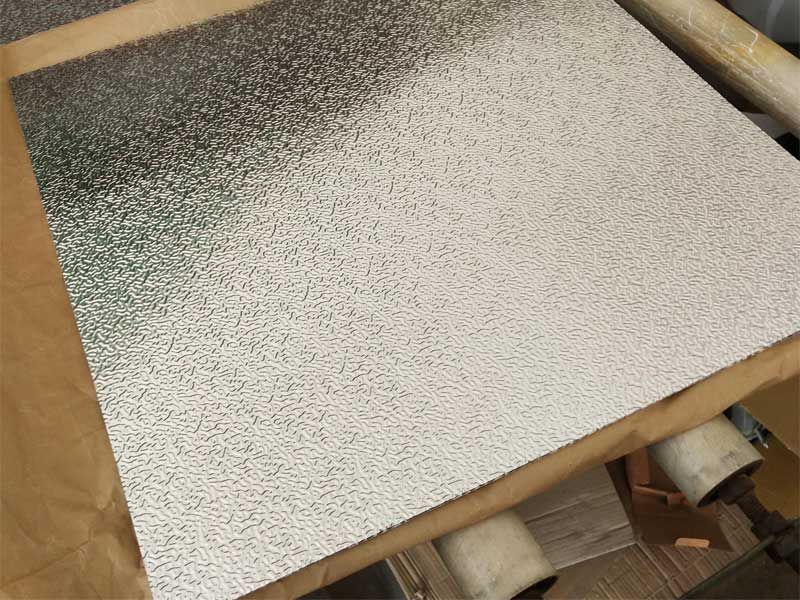
1060 is industrial pure aluminum with an aluminum content of ≥99.60%. Impurities such as iron and silicon are strictly controlled, and it naturally possesses self-passivating oxidation capabilities. In typical inland environments, it can meet rust prevention requirements even when used untreated. We standardly use H14 semi-hard 1060 aluminum as the embossing base, with a tensile strength stable at 110–145 MPa and a yield strength ≥90 MPa. This retains the excellent ductility of pure aluminum while providing sufficient sheet stiffness. A common selection pitfall is using O temper soft aluminum for embossing, which has lower rolling costs but insufficient stiffness in the finished product. The embossed pattern is prone to collapse under stress, and even minor bumps after installation can cause dents. H14, on the other hand, achieves the optimal balance between pattern retention and workability, preventing cracking during bending and seam finishing, and resulting in a complete, three-dimensional pattern after forming.
BCM Aluminum offers three main patterns: orange peel, lentil, and diamond, suitable for different functional scenarios: the orange peel pattern features fine and uniform particles, primarily for thermal insulation and basic decoration; the lentil pattern offers a strong three-dimensional effect, is slip-resistant and anti-dent; and the diamond pattern provides high friction, suitable for pedestrian and maintenance areas. The standard embossing depth is controlled between 0.15–0.20mm, employing a multi-pass progressive embossing process rather than a single strong pressing, combined with continuous roller leveling and low-temperature stress relief treatment after pressing to fully release residual rolling stress. From actual engineering feedback, the value of this process is particularly evident in large-area laying: ordinary 1060 embossed aluminum sheets tend to curl upwards on both sides after uncoiling, requiring nails to force flatten them, which is both unsightly and leaves potential for joint leakage; BCM 1060 stucco aluminum coil maintain a stable flatness of ≤2mm/m, naturally laying flat after uncoiling with uniform and straight overlaps, significantly improving construction efficiency and finished product quality.
In terms of dimensional accuracy and functional performance, 1060 embossed aluminum sheets are manufactured strictly in accordance with ASTM B209 standards. Standard thicknesses range from 0.2mm to 1.0mm, with 0.3mm, 0.5mm, and 0.8mm being the mainstream engineering specifications. Widths can be customized from 100mm to 1500mm, with cutting accuracy controlled within ±0.5mm and thickness tolerance stable within ±0.02mm. The embossed texture forms a uniform, static air layer between the aluminum surface and the insulation layer, improving overall thermal insulation by 10%–15% compared to smooth panels. Simultaneously, the surface creates diffuse reflection, avoiding the glare problem of smooth panels, and the texture effectively hides minor scratches during transportation and construction, offering higher tolerance for defects.
In terms of application scenarios, 1060 embossed aluminum coils are widely used in indoor and outdoor HVAC duct insulation, roof waterproofing linings, ventilation duct wrapping, indoor ceiling bases, and lightweight decorative panels. For selection recommendations, the 0.3–0.5mm orange peel texture version is sufficient for general indoor insulation projects, balancing performance and cost. For areas requiring foot traffic, such as roofs and equipment platforms, prioritize the lentil or diamond texture. In coastal high-salt-spray environments, upgrading to the 3003 stucco embossed aluminum coil is recommended, but in dry inland areas, the weather resistance of 1060 pure aluminum is perfectly adequate for long-term use.
Ultimately, 1060 embossed aluminum sheets are not low-end products, but rather a high-performance, cost-effective solution optimized for typical applications. Choosing the right process version is crucial for balancing cost and project effectiveness. BCM's meticulous process control ensures stable performance even with basic models, providing reliable and economical embossed aluminum materials to customers worldwide.