
3003 aluminum sheet is an Al-Mn (aluminum-manganese) series rust-proof aluminum alloy widely used in industrial applications. Based on aluminum, it incorporates an appropriate amount of manganese to enhance strength while maintaining excellent corrosion resistance, cold workability, weldability, and suitability for surface treatments. 3003 aluminum sheet is commonly used in architectural decoration, air conditioning and heat exchange equipment, kitchenware, pressure vessels, fuel tanks, transportation, signage, electronic housings, and general sheet metal fabrication.
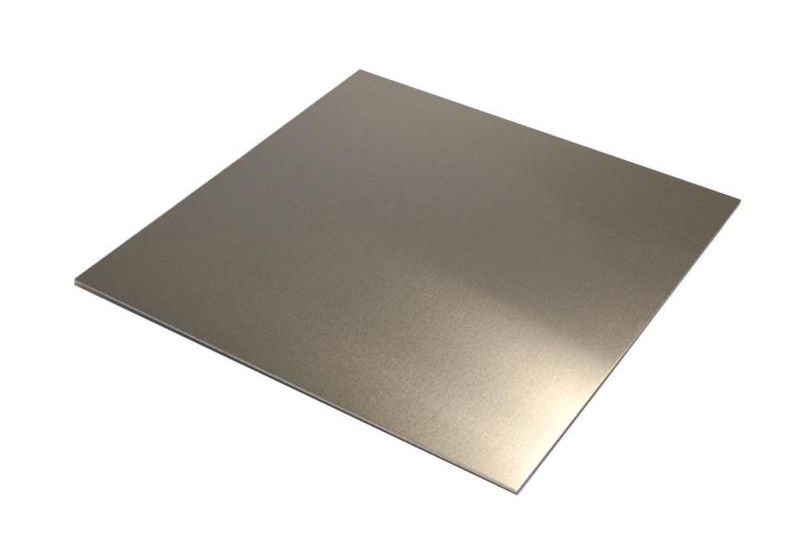
Compared to pure 1100 aluminum sheet, 3003 aluminum sheet offers higher strength and superior resistance to deformation. Compared to Al-Mg series aluminum alloys (such as 5052), it offers a cost advantage, making it suitable for high-volume projects requiring moderate strength, formability, and atmospheric corrosion resistance.
Manganese is the primary strengthening element in the 3003 alloy. According to common standards such as ASTM B209 and EN 573-3, the ranges for its main chemical components are as follows:
Element | Manganese (Mn) | Copper (Cu) | Iron (Fe) | Silicon (Si) | Zinc (Zn) | Other individual elements | Total other elements | Aluminum (Al) |
Content Range | 1.0%–1.5% | 0.05%–0.20% | ≤0.70% | ≤0.60% | ≤0.10% | ≤0.05% | ≤0.15% | Remainder |
Manganese improves the material's strength through solid-solution strengthening and dispersion strengthening, allowing aluminum 3003 to possess a higher load-bearing capacity than 1000-series pure aluminum while maintaining good elongation. 3003 is a non-heat-treatable alloy; its properties are primarily adjusted through cold-rolling work hardening and annealing processes.
Common tempers for 3003 aluminum sheet include O, H12, H14, H16, H18, H22, and H24.
The O temper represents the fully annealed state, while the H series represents work-hardened states, with the numbers indicating varying degrees of hardening. 3003-O aluminum sheet offers excellent plasticity, making it suitable for deep drawing, stretching, bending, spinning, and complex forming operations. This temper is commonly used for cookware, lighting fixtures, containers, chemical equipment liners, and stamped parts. As the material is relatively soft, care should be taken during processing to prevent surface scratches and indentations, and proper stacking methods should be used during transport.
3003-H14 is a semi-hard temper with high market demand, offering a balance between strength and formability. For standard sheet specifications, tensile strength typically ranges from 130 to 170 MPa, and yield strength is generally above 115 MPa; elongation varies with thickness. The H14 temper is suitable for air conditioner fin components, architectural decorative panels, curtain wall backing panels, billboards, vehicle interior panels, and general sheet metal parts.
3003-H24 undergoes strain hardening followed by partial annealing; its formability is generally superior to that of H14, while its strength is slightly lower. H24 is a common choice for products requiring both stamping/bending capabilities and a certain level of rigidity.
3003-H18 is a full-hard temper characterized by high surface hardness and strength, making it suitable for products that require flatness, rigidity, and resistance to minor mechanical damage. Its capacity for further forming is limited; therefore, bending radii and processing directions must be thoroughly evaluated before complex bending operations.
3003 aluminum sheet is available in coils, flat sheets, cut pieces, and cut-to-length sheets according to customer requirements. Common thicknesses range from 0.2 mm to 6.0 mm, with thicker specifications available based on rolling capabilities and specific standards. Standard widths include 1000 mm, 1220 mm, 1250 mm, and 1500 mm, as well as custom widths; lengths can be cut to project specifications.
Available surface finishes include mill finish, brushed, embossed, mirror-like, color-coated, film-laminated, and anodizing-grade surfaces. For customers involved in stamping and deep processing, surface quality control focuses on minimizing oil stains, roll marks, scratches, color variations, wavy edges, and edge burrs. For export orders, it is advisable to clearly specify the surface grade, protective film type, permissible defect standards, and packaging method to avoid delivery issues caused by inconsistent acceptance criteria.
3003 aluminum sheet offers excellent weldability and can be joined using TIG, MIG, or resistance welding. Before welding, the oxide layer, oil, and moisture must be removed; after welding, attention should be paid to strength changes in the heat-affected zone and the quality of the weld's appearance. For welded structures requiring corrosion resistance, it is recommended to select a suitable filler wire based on the operating medium and to apply appropriate sealing or surface protection.
Regarding bending operations, the O and H24 tempers are suitable for small-radius bending, whereas the H14 and H18 tempers require a larger inner bending radius to minimize the risk of edge cracking. For deep-drawn parts, the 3003-O temper is preferred; trial runs should be conducted to verify the process, taking into account die corner radii, lubrication conditions, and material thickness.
Practical export experience indicates that quality control for 3003 aluminum sheet focuses primarily on thickness tolerance, flatness, surface cleanliness, hardness consistency, and moisture-proof packaging. For maritime transport, packaging should include moisture-proof paper, desiccant, plastic film, and fumigated wooden or steel pallets to mitigate the risk of oxidation spots, white spots, and surface corrosion caused by condensation.
Thanks to its stable overall performance, mature processing technology, and cost-effectiveness, 3003 aluminum sheet has long been a staple in general industrial manufacturing and architectural decoration markets. When purchasing, it is recommended to clearly specify the applicable standards, alloy temper, dimensional tolerances, surface requirements, mechanical properties, packaging specifications, and quality assurance documentation to ensure the material is compatible with the intended end-use processing.