
In the fields of building cladding and industrial roofing, the value of embossed aluminum sheets goes far beyond decoration. Compared to the cold, monotonous feel of smooth panels and the fragmented texture of ordinary orange peel patterns, Stucco embossed aluminum coils, with their textured, three-dimensional patterns, excellent stain and scratch resistance, and low glare, have become a mainstream material that combines design and practicality. BCM Aluminum has been deeply involved in the field of embossed aluminum materials for construction for many years. Truly high-quality 3003 stucco embossed aluminum coils are the result of the combined effects of the base alloy, the embossing process, and stress control, rather than simply being embossed after rolling.
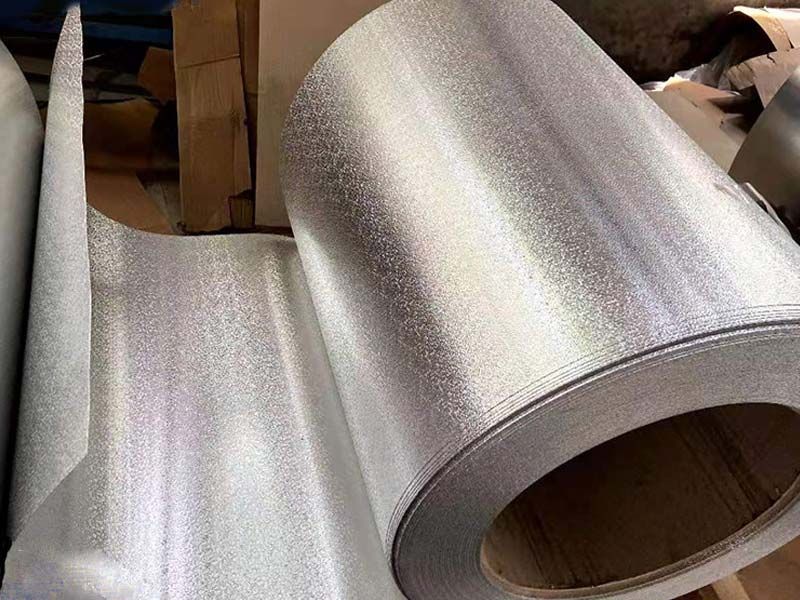
Embossing is a three-dimensional deformation process, requiring both strength and formability of the substrate. This is why 3003 aluminum-manganese alloy is chosen as the core substrate. 1060 pure aluminum has relatively low hardness, resulting in insufficient stiffness after embossing and making it prone to vibration and deformation in windy conditions. High-strength alloys, on the other hand, lack sufficient plasticity, making them prone to cracking at the edges of the pattern during embossing. 3003 alloy strikes a perfect balance between corrosion resistance, strength, and plasticity. Its tensile strength in the H14 state is stable at 145–195 MPa, and its yield strength is ≥120 MPa. It possesses sufficient structural rigidity to maintain the three-dimensional shape of the pattern while preserving grain integrity during embossing deformation. Meanwhile, 3003's natural resistance to atmospheric corrosion allows it to withstand over 500 hours of neutral salt spray testing. It is resistant to pitting and rust during long-term outdoor use and meets the service requirements of conventional inland buildings without the need for additional coatings, making it the optimal substrate choice for building exteriors.
The core of stucco embossed patterns lies in the uniformity and three-dimensionality of the irregular, uneven texture. BCM uses precision-carved rollers for one-time pressing, with a standard embossing depth controlled between 0.18 and 0.25 mm. The patterns are naturally staggered with no repeating units, resulting in a uniform visual texture. Compared to the shallow embossing of ordinary low-cost molds, the depth is increased by approximately 40%, providing a stronger three-dimensional texture and better concealing minor scratches from transportation and installation. Many manufacturers ship directly in rolls after embossing, leaving significant residual rolling stress on the surface. This stress gradually releases with temperature changes after installation, easily leading to warping and seam cracking. BCM incorporates continuous low-temperature leveling and annealing after the embossing process to fully release internal stress, ensuring a stable panel flatness of ≤2mm/m. This results in dimensional stability after installation, uniform joint gaps, and mitigates the risk of later deformation from the process perspective.
From an application value perspective, the added functionality of the stucco embossed texture far exceeds its decorative attributes. The diffuse reflection properties of the surface avoid the strong light reflection pollution of glossy panels, making it suitable for building facades in urban core areas. The rough textured base significantly improves the adhesion of subsequent spraying and fluorocarbon coatings, achieving a T-bend performance of up to 2T without paint peeling and extending coating lifespan. Standard thicknesses of embossed aluminum coil range from 0.4mm to 1.2mm, and widths can be customized from 50mm to 1500mm, with thickness tolerance controlled within ±0.02mm. It can be directly roll-formed into wall panels, roof panels, and cornice moldings. It is widely used in public building exterior wall cladding, industrial plant roof cladding, old building renovation facades, and sunshade louvers, especially in projects with dual requirements for appearance and weather resistance.
From a practical engineering perspective, it is recommended that 3003-H14 stucco embossed aluminum sheets be sufficient for conventional inland buildings; for coastal areas with high salt spray, it is recommended to use polyester or fluorocarbon pre-coatings; and for large-span roofs, the H24 low-stress version should be prioritized to further reduce the risk of deformation. BCM supports full-dimensional customization of pattern depth, substrate condition, and surface coating. Each batch of products comes with test reports on pattern depth, straightness, and mechanical properties to ensure the successful implementation of the project.