In the field of industrial insulation engineering, under-insulation corrosion (CUI) is one of the most insidious and costly failure modes. Moisture seeps into the insulation core material through seams and breaks in the outer sheath, remaining on the back of the aluminum substrate for extended periods. During thermal cycling, this accelerates electrochemical corrosion, ultimately leading to pipe corrosion and perforation, and a sharp drop in insulation performance. Traditional kraft paper and ordinary PE film moisture barriers have limitations such as high moisture permeability, susceptibility to damage, and narrow temperature resistance ranges, making them unsuitable for harsh operating conditions such as petrochemical plants, cryogenic environments, and high-humidity coastal areas. BCM Aluminum's aluminum cladding sheet with Polysurlyn moisture barrier utilize a high-polymer composite vapor barrier system to construct a fully enclosed moisture barrier, reducing CUI risk at its source and representing a mainstream upgrade choice for high-end insulation projects worldwide.
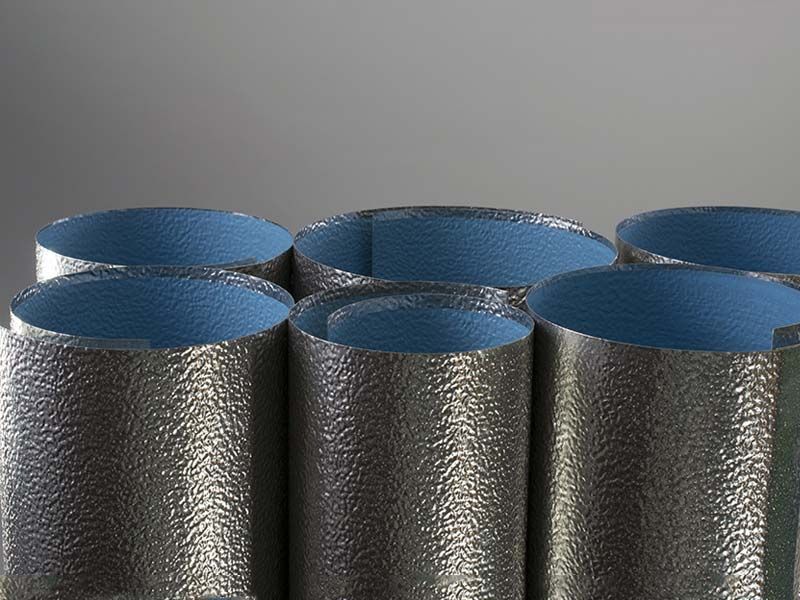
Salin membrane is a multi-layered functional composite membrane based on ion-bonded polymers. The industry standard thickness is 76μm (3mil). It achieves tight bonding with an aluminum substrate through a high-temperature hot-pressing process, with a composite interface peel strength ≥1.5N/mm. After immersion in room temperature water for 24 hours, it shows no delamination or edge curling, fully complying with the ASTM C1729 vapor barrier performance standard. Its internal structure employs a three-layer functional structure for synergistic protection: the surface layer is a dense, pinhole-free barrier layer, tested according to ASTM E96 standard, with a water vapor transmission rate (WVTR) as low as 0.75g/(m²·24h), only 1/15 of that of ordinary kraft paper moisture-proof layers, effectively blocking the bidirectional penetration of liquid and gaseous water vapor; the middle layer is a one-way absorbent layer that irreversibly adsorbs residual moisture around the aluminum substrate, preventing long-term immersion of the substrate in condensate; the bottom layer is a special adhesive layer that ensures bonding stability over a wide temperature range, with a continuous service temperature coverage from -40℃ to 95℃, suitable for both steam pipelines and cryogenic insulation applications.
In terms of aluminum substrate configuration, BCM aluminum cladding with Polysurlyn moisture barrier are manufactured strictly according to ASTM B209 standards, covering three core grades: 1060 pure aluminum, 3003 rust-resistant aluminum, and 5052 aluminum-magnesium alloy. The standard configuration is H14 semi-hardened temper, with H24 low-stress temper available for customization. The 3003-H14 series is the main general-purpose type, with manganese alloying further enhancing its atmospheric corrosion resistance, achieving over 1000 hours of neutral salt spray testing, suitable for most industrial pipeline scenarios. The 5052 series is specifically optimized for coastal salt spray and chemical corrosion environments, extending its service life by over 40% compared to the pure aluminum series. Standard thicknesses of aluminum cladding sheet range from 0.3mm to 1.2mm, and standard widths include engineering-grade specifications such as 914mm and 1219mm, with thickness tolerance consistently controlled within ±0.02mm. An orange peel embossing process can be used, utilizing the textured surface to create an air insulation layer to further reduce heat loss while improving the surface's anti-dentation and anti-slip properties.
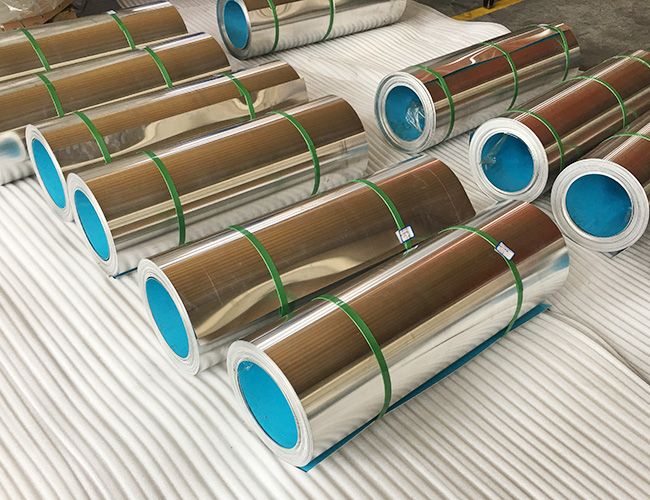
Compared to traditional on-site layered moisture-proofing solutions, factory-prefabricated aluminum cladding roll with Polysurlyn moisture barrier reduce on-site construction steps by 30%, avoiding vapor barrier failure caused by oversights in manual overlapping. The membrane layer remains intact and crack-free after bending, seaming, and stamping. This product is widely used in demanding applications such as petrochemical process pipelines, LNG cryogenic pipelines, power plant steam networks, and coastal chemical storage tank insulation, extending the service life of the outer protective layer of the insulation system to over 20 years and significantly reducing total lifecycle maintenance costs.
BCM supports fully customized production, with precision slitting and custom sheeting services. Each batch of products comes with complete material certificates and membrane performance test reports, adapting to acceptance standards for various industrial projects worldwide, providing reliable and long-lasting vapor barrier protection for high-requirement insulation projects.