
Aluminum coils for beverage cans are primarily made of 3004 and 3104 aluminum alloys, offering high formability, corrosion resistance, and weldability, meeting the requirements for lightweighting and sealing. The thickness of aluminum coils for beverage cans typically ranges from 0.1-0.5 mm, and the width can range from 800-1730 mm. Specific specifications can be adjusted according to the design and manufacturing process of the beverage can.
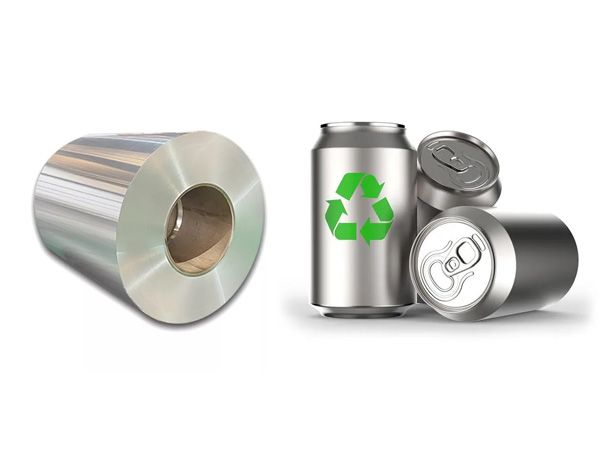
Main aluminum alloys of aluminum coil for beverage cans:
- 3004 aluminum coil:
Properties: Good formability, corrosion resistance, weldability, and medium strength. It has high plasticity in the annealed state, making it easy to process into various shapes, such as beverage can bodies.
Applications: Primarily used for various industrial structural products requiring certain strength, weldability, and high corrosion resistance, such as beverage can bodies, automotive parts, refrigeration equipment, and pipes.
Specifications: Thickness ranges from 0.2-8 mm, width from 100-2650 mm, and length is customized according to requirements. Alloy tempers can be customized, including O, H12, H14, and other tempers.
- 3104 aluminum coil:
Properties: Similar to 3004 aluminum alloy, it also possesses good formability, corrosion resistance, and weldability.
Applications: Widely used in the manufacture of beverage can bodies, as well as automotive parts, refrigeration equipment, and other fields.
Specifications: Thickness is typically between 0.2-0.36 mm, depending on the can design requirements.
Characteristics of aluminum coil for beverage cans
- Thickness and lightweighting:
Aluminum coil thickness is typically between 0.2-0.36 mm. Through a "thinning and stretching process," the can wall thickness can be reduced from the initial 0.25 mm to below 0.1 mm (the bottom and mouth of the can are slightly thicker due to load-bearing requirements), achieving extreme lightweighting. Aluminum has a density of only 2.7 g/cm³, far lower than steel (7.85 g/cm³). A 330ml aluminum can weighs only 15-20 grams, half the weight of a tin can and one-tenth the weight of a glass bottle, significantly reducing logistics and transportation costs (aluminum cans can carry over 40% more cargo than tin cans in a full truckload), and is also more suitable for portable applications.
- Formability and processing efficiency:
3000 series aluminum alloys have excellent ductility, allowing aluminum coils to be stretched into can bodies in a single process using a "thinning and stretching process." The scrap rate during processing is low (only 2%-3%), making it suitable for large-scale automated production (600-1200 cans can be produced per minute).
- Surface treatment and corrosion resistance:
A dense oxide film (Al₂O₃) naturally forms on the aluminum surface, isolating it from air, moisture, and acidic substances in beverages (such as phosphoric acid in cola and citric acid in fruit juice), preventing can wall corrosion. Some high-end aluminum cans also have a food-grade epoxy resin coating (2-5μm thick) sprayed on the inner wall to further prevent metal ion migration and ensure food safety.
Application scenarios of aluminum coil for beverage cans:
Carbonated beverages: For carbonated drinks (cola, Sprite), beer, the pressure resistance and sealing properties of aluminum cans can lock in the gas, preventing leakage.
Room temperature beverages: For functional beverages, tea drinks, and fruit juices, lightweight and portable options align with consumer habits.
Small capacity scenarios: For 200ml and 330ml mini cans, the thin-walled design of aluminum cans reduces the cost per can, adapting to the trend of "smaller portions."