
As a Canadian marine grade aluminum sheet manufacturer and exporter, BCM understands the core value of marine materials in the harsh marine environment—safety, durability, and economy are all indispensable. Our marine grade aluminum sheet series has obtained certifications from internationally recognized authorities such as ABS (American Bureau of Shipping), BV (Det Norske Veritas), DNV (Det Norske Veritas), and Lloyd's Register (LR). Every performance indicator has been validated in extreme environments. This is not only our commitment to quality but also the foundation for global shipbuilders to mitigate risks and enhance the overall performance of their vessels.
From a material perspective, the core competitiveness of marine aluminum sheet with class approved stems from precise alloy proportions and stringent production control. Our main supply series of aluminum-magnesium alloys includes 5083, 5086, and 5052. The 5083 marine grade aluminum sheet has a magnesium content controlled at 4.0%-4.9%, with a tensile strength of 275-310 MPa. While maintaining the lightweight advantage of aluminum alloys, which have a density only one-third that of steel, it achieves load-bearing capacity comparable to some steel materials. This can reduce hull weight by more than 20%, directly increasing speed by 5%-8% and reducing fuel consumption by more than 10%. More importantly, its naturally formed dense oxide film, combined with a special heat treatment process, provides seawater corrosion resistance far exceeding that of ordinary aluminum materials. It can achieve 2000 hours of no significant corrosion in salt spray testing and has a service life of over 25 years.
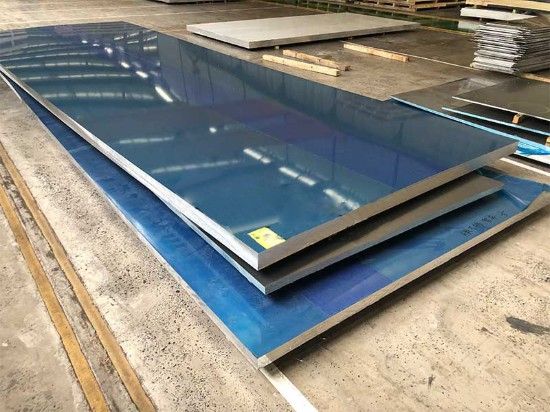
The class approved certifications of our marine grade aluminum sheet are not simply paper documents, but a comprehensive verification of our material performance, production processes and quality control. Behind each certification lies our engineering team's deep understanding of materials science and professional response to the stringent requirements of the marine environment. Taking welding performance as an example, by optimizing the alloy's trace element ratio, our marine grade aluminum plates are compatible with various welding methods such as TIG and MIG. The corrosion resistance and strength retention rate of the weld area exceeds 90%. Our 5083 H321 aluminum plates, supplied to a North American shipyard, were successfully used in the deck splicing of a 1200-ton cargo ship. After three years of marine service verification, the welds showed no cracking or corrosion. This reliable processing performance makes the manufacture of complex hull structures more efficient and significantly reduces construction costs.
Based on the needs of different ship types, we have developed targeted product application solutions, as shown in the table below:
Alloy Grade | Core Performance Advantages | Typical Application Scenarios | Actual Cases |
5083 | High corrosion resistance, high strength, excellent weld crack resistance | Cargo ship decks, side panels, engine mounts | North American fishing vessel hull modification, 3 years without rust |
5086 | Extremely strong corrosion resistance, high electrical conductivity | Fuel tanks, seawater pipelines, pressure vessels | Brazilian grain carrier fuel system, suitable for high-salt marine environments |
5052 | Good formability, excellent cost adaptability | Yacht hulls, porthole frames, gangways | Canadian local yacht factory, annual supply exceeding 500 tons |
Our marine grade aluminum sheets are optimized for specific marine applications:
- Corrosion resistance:
Taking our main product 5083 H116 aluminum sheet as an example, its corrosion rate in 3.5% NaCl solution is less than 0.025mm/year, only 1/20 of that of ordinary carbon steel. This superior corrosion resistance is attributed to precisely controlled magnesium content (4.0-4.9%) and strict control of impurity elements (iron <0.4%, silicon <0.4%).
- Mechanical properties:
Our marine grade aluminum plates achieve a precise balance between strength and toughness. Taking the 5456-H116 aluminum alloy as an example, its tensile strength exceeds 310 MPa, its yield strength is not less than 230 MPa, and its elongation remains above 10%, enabling it to withstand the complex and variable load conditions at sea.
- Weldability:
We have specifically optimized the weldability of the material. By controlling the copper content (<0.1%) and zinc content (<0.25%), we ensure that the weld joint efficiency reaches over 90%, and the corrosion resistance of the weld area is essentially consistent with that of the base material.
- Low temperature performance:
Designed for the cold environments of Canadian and Northern European waters, our marine grade aluminum sheets maintain good toughness at -196°C, absorbing no less than 80% of the impact energy at room temperature, fully meeting the needs of polar navigation.
In practical applications, certification brings not only quality assurance but also trade facilitation. Our marine grade aluminum plates are exported to over 20 countries and regions worldwide, quickly passing local ship inspection procedures without additional performance testing. For vessels with special needs, such as polar research vessels and high-speed patrol boats, we can also provide customized alloy formulations and specifications. For example, the low-temperature reinforced 5083 aluminum plate developed for our Nordic customers achieves an 85% impact toughness retention rate at -40°C, perfectly suited for polar marine environments.
As a manufacturer, we firmly believe that high-quality marine aluminum sheets with class approved are not just materials, but solutions. We BCM, with international certifications as foundation, precise performance as core, and a global supply chain as support, helps every vessel navigate safely and operate efficiently at sea. For certification reports, performance parameter tables, or customized solutions for specific grades, please contact our technical team directly.