
In aluminum coil applications, "thickness" is often the first parameter discussed, yet also the most easily misused. Many customers immediately ask: Is 0.5mm enough? Is 1.0mm too thick? As a technical and sales professional at BCM Aluminum serving the export market for many years, I prefer to understand thickness selection as an engineering decision "centered on the application scenario": it is simultaneously constrained by strength, forming method, surface treatment, connection structure, cost, and delivery time stability. Choosing the right thickness fully utilizes material properties; choosing the wrong thickness can lead to cost waste, or even on-site deformation, cracking, or failure.
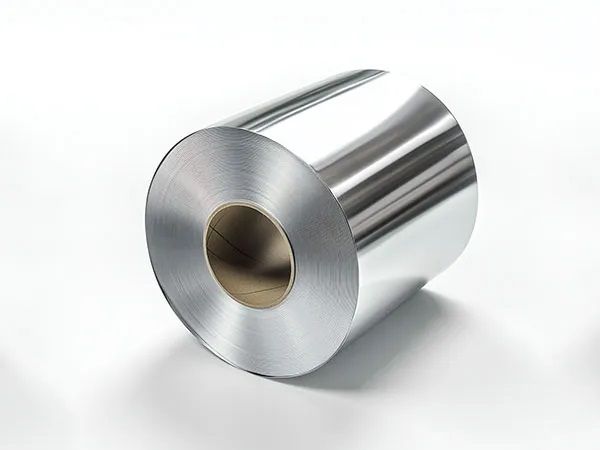
Thickness is not just a "number," but also an entry point for performance. Changes in aluminum coil thickness directly affect three key capabilities:
1) Stiffness and resistance to deformation: Increased thickness significantly enhances the sheet's resistance to bending (especially sensitive to structural components).
2) Forming and processing window: Thinner sheets are more prone to wrinkling and misalignment; thicker sheets are more difficult to stamp or bend to small radius angles, requiring higher tonnage and more rational mold design.
3) Surface and durability: Coating/film systems typically require a certain level of substrate smoothness, resilience, and edge stability. Insufficient thickness can lead to more pronounced ripples after coating and a more noticeable oil canister effect after assembly.
Choosing aluminum coil thickness by application:
1) Building envelope/decoration (Curtain walls, Ceilings, Column wrapping, Roof flashing)
For these applications, common aluminum coil thicknesses are 0.6–1.5 mm. For interior ceilings or decorative panels, 0.6–0.9 mm is commonly used for weight reduction and bending ease; for exterior facades or panels requiring higher wind pressure and dent resistance, 1.0–1.5 mm is preferred. My experience is: don't just look at the "panel thickness," but also consider the joist spacing and fixing method (riveting/screws/hangers). Even with the same 1.0 mm thickness, performance can vary greatly under different support conditions—thickness is a material parameter, but system design determines the final performance.
2) Appliance and consumer goods casings (Refrigerator side panels, Washing machine panels, Lamp reflectors, etc.)
Most applications use thicknesses between 0.3–1.0 mm. For panels with high appearance requirements, many customers seek a balance between 0.5–0.8 mm: ensuring stable stamping/bending while controlling cost and weight. My most frequent reminder here is that if the process involves deep drawing or complex flanging, simply increasing thickness may not solve the problem and could even increase the risk of cracking. A more effective approach is to match thickness with alloy condition (e.g., 3000 series/5000 series/1000 series), elongation, and lug height control.
3) Transportation and box carriers (Train interior panels, Van skins, Marine inner and outer panels, Container ship components)
Common thicknesses fall between 1.0–3.0 mm, or even thicker. These applications prioritize fatigue resistance, impact resistance, corrosion resistance, and ease of maintenance. For example, box car skins need to be lightweight while resisting hand-pushed dents; many projects commonly use thicknesses between 1.2–2.0 mm. In coastal/salt spray environments, thickness selection must be considered in conjunction with the corrosion protection system (anodizing/coating) and the alloy's corrosion resistance, rather than simply "the thicker the better."
4) Packaging and thin material applications (Bottle cap material, Aluminum-plastic composites, Heat insulation and reflective materials, etc.)
These applications often involve aluminum coil thicknesses of 0.02–0.3 mm or even thinner. The core considerations are not rigidity, but rather pinhole rate, thickness tolerance, surface cleanliness, tension, and roll shape. For thin materials, customers are truly buying "stability": the ability to continuously and rapidly slit, coat, and laminate without breakage—this is more critical than nominal thickness.
In project communication, I often use two questions to help clients quickly determine the appropriate aluminum coil thickness:
What is the failure mode of your product? Is it flexural deformation, localized dents, or forming cracks?
What is your processing method? Stamping, rolling, bending, and stretching all have completely different requirements for the thickness window.
The final recommendation is: a more conservative aluminum coil thickness is not necessarily safer. Adding 0.2mm can mean a significant increase in cost, transportation, and processing energy consumption; while subtracting 0.2mm can result in a large number of on-site rework. Choosing the appropriate aluminum coil thickness is essentially about finding the most stable balance between "performance margin" and "manufacturing economics." In export supply, BCM Aluminum prefers to package thickness, alloy, temper, coating/surface, and coil shape control into a feasible solution—making thickness not just a parameter, but a part of reliable delivery.