As a sales and technical support staff member at BCM Aluminum, the most frequent question I receive when communicating with North American shipyards, conversion companies, and offshore engineering clients isn't "Is the strength sufficient?" but rather "How long can it last in saltwater, and how can this be proven?" The core value of marine aluminum sheet lies in the certainty and verifiability of its resistance to seawater corrosion.
1. Why does seawater "eat metal"?
Seawater is a highly conductive electrolyte environment, containing chloride ions (Cl⁻) and abundant dissolved oxygen, most easily triggering three types of corrosion: pitting corrosion, crevice corrosion, and galvanic corrosion. In particular, chloride ions destroy the passivation film on the metal surface, inducing accelerated localized dissolution; and the contact between different metals (such as aluminum and stainless steel fasteners) creates a potential difference, causing aluminum to act as the anode and be "sacrificed."
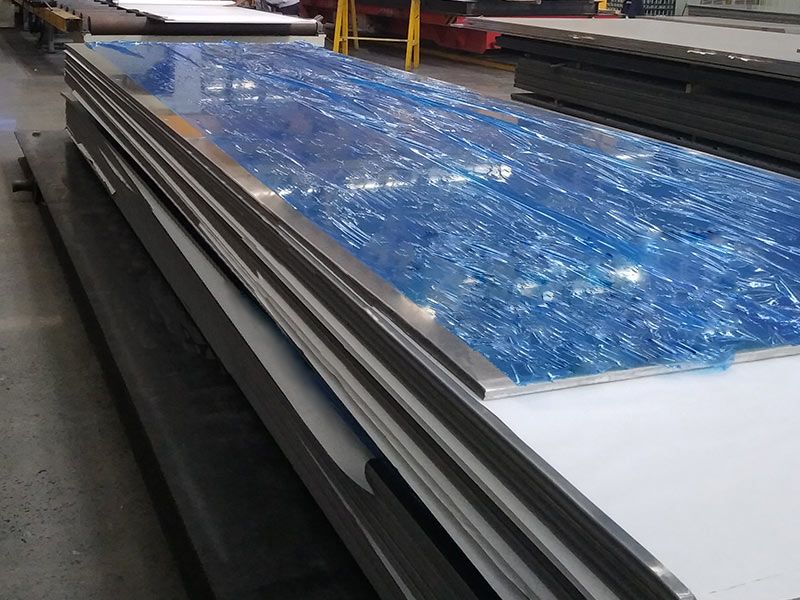
2. The root cause of corrosion resistance in BCM marine grade seawater resistant aluminium sheets
Our main product line for North American marine and offshore engineering clients, focusing on seawater corrosion resistant aluminium plates, is the 5xxx (Al-Mg) series marine alloys (such as 5083/5086/5456). Their corrosion resistance mechanism is clear and widely recognized in the industry:
- Natural oxide film self-passivation:
Aluminum rapidly forms a dense Al₂O₃ protective film (nanometer-thickness) in air/water. This film possesses self-healing properties in neutral seawater environments, serving as aluminum's first line of defense compared to ordinary carbon steel.
- Magnesium (Mg) strengthening and enhanced seawater adaptability:
The 5xxx series uses Mg as the main alloying element. While maintaining good weldability and formability, it significantly improves resistance to general corrosion and pitting corrosion, making it more reliable for long-term seawater immersion/splash applications. Compared to 2xxx (Al-Cu) alloys, which are more strength-oriented, the 5xxx series aluminum alloy is more "friendly" to seawater environments.
- Organizational and cleanliness control reduces pitting corrosion sources:
Pitting corrosion often starts from inclusions, coarse second phases, or grain boundary anomalies. BCM emphasizes inclusion control and microstructure uniformity in the smelting, hot rolling, heat treatment, and straightening processes, and includes factory testing (chemical composition, mechanical properties, and corrosion-related verification when necessary) to postpone the pitting corrosion "starting point" as much as possible.
3. What quantifiable advantages does it bring?
More controllable seawater corrosion resistance: Under typical marine atmospheric/splash zone conditions, the maintenance frequency of 5xxx marine grade aluminum plates is typically significantly lower than that of carbon steel systems (carbon steel requires continuous reliance on coatings and cathodic protection systems to combat rust propagation).
- Lightweight design brings long-term cost benefits:
Aluminum has a density of approximately 2.70 g/cm³, only about 1/3 that of steel (approximately 7.85 g/cm³). Under the same structural design objectives, weight reduction usually means lower fuel consumption/greater load/higher speed potential, which is particularly important for North American commercial ship owners.
- Welding and manufacturing friendly:
5xxx series aluminum alloy is widely used in ship hull welding structures. With appropriate welding materials and processes, it can balance strength and corrosion resistance, making it suitable for mass production and retrofitting.
4. Typical application scenarios (Common in North American)
- Offshore and inland waterway vessels:
Workboats, patrol boats, tugboat superstructures, landing craft structural components
- Fishing and recreational vessels:
Hull plates, decks, bulkheads, hatch covers, fender components
- Offshore and port equipment:
Platform walkways, ladders, equipment bases, marine environment structural protective plates
- Combined with anti-corrosion systems:
For splash zones and areas prone to gaps, sealant/coating/anodic systems can be used to further improve durability and maintainability.
5. Applying corrosion resistance to engineering details
True seawater corrosion resistance depends not only on the material grade but also on the structure and assembly: avoiding long-term water accumulation in gaps, proper drainage design, dissimilar metal isolation (gaskets/coatings), fastener selection and electrochemical matching, etc. Beyond simply supplying materials, BCM is also willing to assist customers from a technical perspective in translating material advantages into overall vessel lifespan advantages.