
In industrial aluminum materials, a supplier's comprehensive capabilities directly determine cost control and delivery stability for downstream processing projects. Extensive experience in aluminum procurement and supply chain management shows that relying solely on price often leads to overlooking hidden costs associated with issues such as batch-to-batch color variations, dimensional deviations, and delivery delays. Therefore, selecting a wholesale aluminum coil supplier requires a multifaceted evaluation.
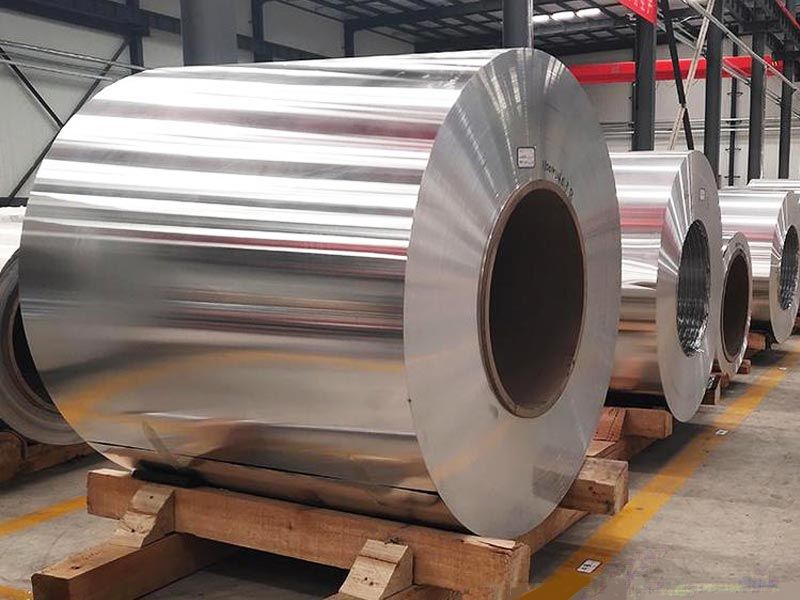
A factory envelope project in Toronto once encountered issues after sourcing low-priced 3003 color coated aluminum coils: excessive batch color variation (with a measured ΔE approaching 3) resulted in visual inconsistency across large wall areas. The costs associated with shipping and downtime for the subsequent rework and material replacement amounted to approximately four times the initial price savings. This case reinforces an industry consensus: core metrics for wholesale procurement must include batch consistency, dimensional precision, and delivery reliability, rather than just price comparisons.
It was against this backdrop that BCM was admitted to the approved supplier list. A Mexico client once placed an urgent order requiring the production and shipment of a full container of 3105-H24 embossed aluminum coils within 15 days—a task that typically requires a four-week production cycle. BCM confirmed inventory status on the same day, completed slitting by the 5 day, and delivered the goods to the designated yard by the 13 day. The accompanying inspection report detailed key metrics such as T-bend performance, coating thickness deviation, and salt spray test duration, enabling the client to pass the factory audit on the first attempt. This case demonstrates BCM’s practical capabilities in inventory management and rapid response to urgent orders.
From a factory operations perspective, BCM's wholesale service capabilities are evident across three dimensions.
First, the company maintains a standing inventory of over 2,000 tons of finished products, covering mainstream alloys, tempers, and thickness specifications; standard orders can be delivered within 7 to 15 days, meeting both urgent top-up needs and routine replenishment requirements.
Second, thickness tolerance is consistently controlled within ±0.005mm—surpassing general industry standards—which boosts the yield rate of downstream deep-processing operations (such as stamping and roll forming) by approximately 5% to 8%.
Thirdly, every product batch comes with comprehensive material certification and test reports, ensuring heat-number traceability. Compliance documentation required for export projects can be prepared rapidly, thereby reducing communication overhead during business negotiations.
Another set of real-world data offers valuable insight. A cold-chain equipment manufacturer previously sourced 1060-O orange-peel embossed aluminum coils through local distributors, incurring two layers of intermediary costs. After switching to direct factory-wholesale procurement from BCM, the landed cost for identical specifications dropped by approximately 12%. Additionally, the packaging met export standards, featuring double-layer PE film, moisture-proof lining, and standard wooden pallets. Following a successful trial container order, the client transitioned to a quarterly framework agreement and currently maintains a steady monthly volume of two containers.
BCM's technical support capabilities during the material selection phase are particularly noteworthy. Drawing on years of industry experience, BCM’s technical team recommends specific alloys and tempers based on the client’s processing methods, operating environment, and budget. For instance, they might recommend 1060 pure aluminum with an orange-peel embossed finish for indoor thermal insulation cladding, or suggest upgrading to a 3003 alloy with a fluorocarbon coating for coastal environments with high salt-spray exposure. This proactive technical consultation helps downstream clients minimize costs associated with material trial-and-error and accelerates the product introduction cycle.
From a procurement management perspective, the value of wholesale aluminum coil supplier lies in its ability to mitigate quality and delivery risks at the source. BCM's comprehensive performance across inventory scale, manufacturing precision, traceability systems, and technical services ensures a stable supply capability for long-term partnerships. For buyers seeking long-term cooperation, the recommended approach is to start with sample testing and small-batch trial orders—focusing on verifying thickness tolerances, surface quality, and report completeness—before establishing a full partnership based on factors such as responsiveness to urgent orders. In the aluminum wholesale sector, supply stability and lifecycle cost control are consistently more critical decision-making factors than unit price alone.