
Cold rolled aluminum strip is a high-precision metal strip produced by rolling hot-rolled aluminum coils through multiple passes at room temperature. Its thickness is typically between 0.006-5mm, width 10-2800mm, and dimensional tolerances can reach ±0.01mm. It is an indispensable basic material in modern industry. As a sales representative for BCM Aluminum for many years, I deeply understand that the unique value of this material lies not only in the process itself, but also in how it empowers downstream industries to achieve performance breakthroughs.
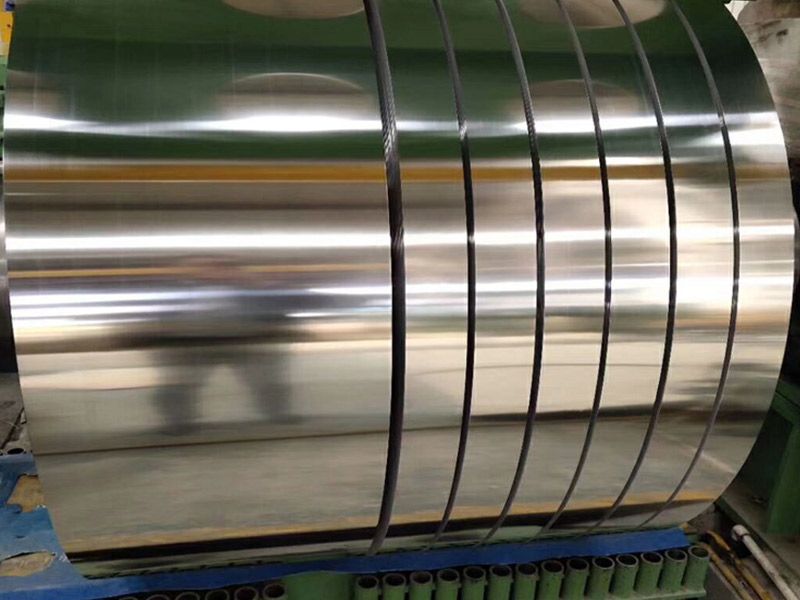
Cold rolled aluminum strip is essentially a precision-manufactured product whose material properties are improved through cold work hardening. Its production begins with hot-rolled slabs, which are rolled through multiple passes on a 4-20 roll precision mill at below the recrystallization temperature (usually room temperature), combined with tension control (0.5%-5MN/m) and online leveling, ultimately forming a finished product that combines strength and precision. This process, without altering the chemical composition, can increase tensile strength by 30%-80%, while simultaneously achieving a mirror-level surface roughness (Ra≤0.3μm), providing an ideal substrate for subsequent processing. BCM Aluminum's cold rolling line utilizes a six-roll CVC mill, coupled with an AGC thickness control system, ensuring that the thickness deviation of each coil is controlled within ±0.005mm, far exceeding North American industry standards.
The core advantages of cold rolled aluminum strip are reflected in four major dimensions:
1. Dimensional Accuracy:
Thickness tolerance can reach ±0.005mm, and flatness per meter ≤1mm, suitable for precision stamping and welding.
2. Controllable Mechanical Properties:
By adjusting the rolling passes and annealing process, a full range of states from soft (O-state) to extra-hard (H18) can be obtained, with tensile strength covering 70-350MPa.
3. Excellent Surface Quality:
No oxide scale, low roughness, suitable for direct application to high-end surface treatments such as coating and anodizing.
4. Exceptional Machinability:
The uniform microstructure imparted by cold work hardening reduces stamping springback by 15%-25%, making it particularly suitable for forming complex shapes.
The most popular cold rolled aluminum strips in the North American market are 1000 series pure aluminum (1050/1060) and 3000 series aluminum alloys (3003/3004). The former emphasizes electrical conductivity and corrosion resistance, while the latter enhances strength and machinability through the addition of manganese, and is widely used in architectural decoration and food packaging. BCM Aluminum's 4045 brazed aluminum strip is designed for automotive heat exchange systems, with a silicon content controlled at 9.0%-11.0%, and brazing temperatures precisely matched to the standards of major North American automakers.
The application of cold rolled aluminum strip has penetrated various industrial sectors:
- Automotive Lightweighting:
The use of 5052/6061 cold-rolled aluminum strip in battery casings and body panels for new energy vehicles can reduce vehicle weight by 150-200kg, increasing range by 12%-18%.
- High-End Packaging:
Food can lids and pharmaceutical aluminum foil (thickness 0.006-0.02mm) have stringent requirements for surface cleanliness and pinhole rate. BCM products have a pinhole rate controlled at ≤0.3 pins/m².
- Construction Sector:
Metal roofing and curtain wall panels utilize 3003-H24 cold-rolled aluminum strip, combined with color coating processes, achieving a service life of over 30 years, adaptable to the extreme climate of North America.
- Electronic Cooling:
Data center liquid cooling systems utilize 1060-O state aluminum strip with a thermal conductivity ≥220W/(m·K), contributing to a 25% increase in cooling efficiency for AI computing equipment.
As a North American aluminum strip expert, BCM's core competitiveness lies in full-process quality control and deep market understanding. Our cold-rolling production line is equipped with a German-imported surface inspection system capable of identifying defects as small as 0.02mm². Each batch of products comes with material certificates and dimensional reports, conforming to North American standards such as ASTM B209 and AMS 4003. More importantly, our technical team collaborates with customers on development projects. For example, for a Michigan automotive parts supplier, we customized 5754-H22 aluminum strip, adjusting the rolling process to increase elongation to 28%, solving the cracking problem in complex stamped parts.
Cold rolled aluminum strip has long transcended the realm of basic materials, becoming a key carrier of innovation in North American manufacturing. BCM Aluminum adheres to an "application-oriented" product philosophy, using precision aluminum materials manufactured in Canada to help customers maintain a leading position in the trends of lightweighting, greening, and intelligent manufacturing. For technical solutions for specific alloy cold-rolled aluminum strips or to obtain the latest pricing in the North American market, please contact our sales team for professional advice tailored to your needs.